The Key Facts at a Glance
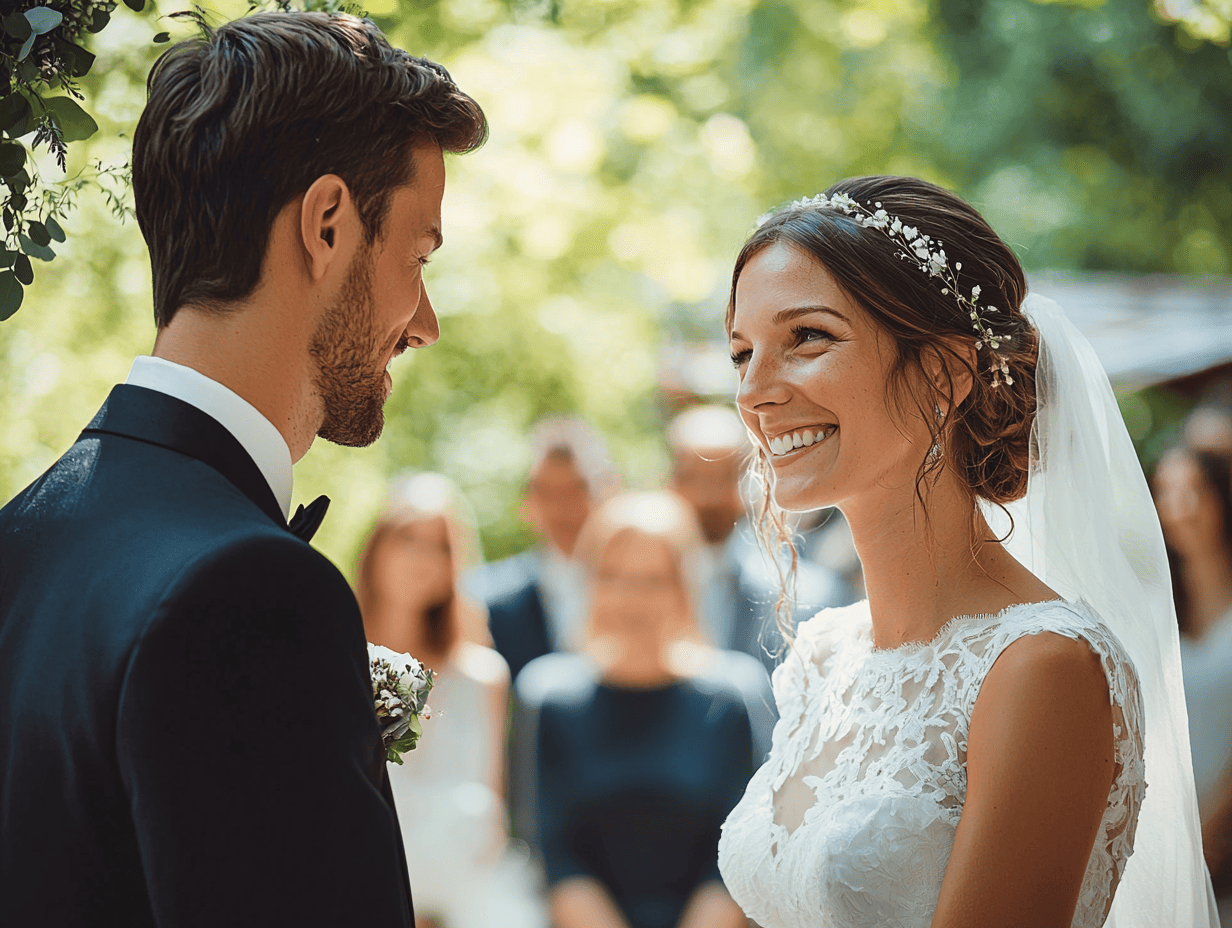
The wedding ceremony is the moment in which you, as a couple, say "I do" to each other officially or symbolically. Whether at the registry office, in church or at a free ceremony - each form of ceremony has its own meaning and its own magic.
Three main forms: civil, church, free
Order of events: registration, pre-ceremony talk, ceremony, wedding vows, ring exchange
Symbols: rings, music, marriage verse, address, blessing
Costs: from small fees to several thousand euros
Special note: The ceremony is the heart of the wedding - legally and emotionally at the same time
What does "Trauung" actually mean?
The wedding ceremony is the solemn act of getting married - the moment in which you, as a couple, become a married couple. While the wedding describes the whole celebration, the ceremony is the core moment: the "I do", the symbols, the emotions.
The German term comes from the old word trauen - in the sense of trusting, believing and loving. That is exactly what it is about: you trust each other, give each other a promise and share this moment with your guests. Whether before the registrar, in a church wedding service with a priest or pastor, or at a deeply personal free ceremony - the wedding ceremony is unique and unforgettable.
What types of wedding ceremony are there?
Every couple has their own idea of what the ceremony should look like. In Germany there are three main forms - each with its own character.
Civil Ceremony
In Germany there is no way around the registry office. Only the civil ceremony makes the marriage legally valid. A registrar leads the ceremony, certifies your marriage and issues the marriage certificate.
Contrary to what is often thought, this ceremony need not feel dry: many registry offices offer atmospheric ceremony rooms or special locations, some even outdoor ceremonies. Whether you have witnesses with you or stand before the registrar just as a couple is up to you. After registration you receive a copy from the family register or a certified marriage certificate - important for all further formalities.
The design also depends greatly on the registry office. Some allow personal words from friends or spouses, others limit themselves to the official address.
Church Wedding
For many, the church wedding is the emotional highlight. During the service you say "I do", speak personal wedding vows and receive the blessing. Music, songs and the chosen marriage verse play an important role.
The wedding service is shaped differently depending on the denomination. Whether Protestant, Catholic or ecumenical: each form has its own structure, but much can be personalised individually - from the choice of songs to personal intercessions and an individual pre-ceremony talk with the priest or pastor. It is especially lovely when the ceremony takes place in your own parish, though another church can be chosen too.
Free Ceremony
Anyone who loves a personal touch chooses a free ceremony. It is not legally binding, but it is especially personal. A free celebrant designs the ceremony to suit you - relaxed, festive, humorous or romantic.
Popular options include symbolic rituals such as the ring exchange, lighting a candle or small surprises from the guests. The choice of location is free too: from a garden to a lake to a mountain lodge - whatever is most beautiful for you is allowed.
So that you can see the differences between the three forms at a glance, we have put together the most important points in an overview:
Comparison of Ceremony Types
Type of Ceremony | Duration | Legal Status | Special Features |
Civil | approx. 20-30 minutes | Legally valid marriage | Mandatory in Germany, certificates & registration, often a sober setting - but can be made festive |
Church | approx. 45-60 minutes | Symbolic, not legally binding | Religious ceremony with a priest or pastor, music, marriage verse and blessing in your own parish or church of choice |
Free | usually 30-45 minutes | Symbolic, not legally binding | Fully customisable, free celebrant, rituals such as ring exchange or candle, any location possible (garden, lake, meadow) |
Order of a Wedding Ceremony - what happens when?
Whether civil, church or free: every ceremony follows a basic pattern - from the festive entrance to the "I do" to the recessional as a married couple.
Typical order of events:
Entrance of bride and groom (together or separately)
Welcome and address by the registrar, priest or celebrant
Music or prayer
Wedding vows
Ring exchange
Declaration of marriage (legal or symbolic)
Kiss & wishes
Recessional of the couple
Special note: Many couples have a pre-ceremony talk before the ceremony, in which the order of events, music and the marriage verse are discussed. Children or other members of the wedding party can also be involved - for example through intercessions, small contributions or surprises.
Duration in comparison:
Civil ceremony: 20-30 minutes
Church wedding: 45-60 minutes
Free ceremony: individual, usually 30-45 minutes
Which symbols and texts belong to a wedding ceremony?
Without symbols, a ceremony would just be an administrative act. Only through gestures, words and rituals does it become an emotional experience.
Ring exchange: symbol of connection and infinity
Wedding vows: personal words or classic formulas
Marriage verse: a guiding theme for your marriage (biblical, poetic or individually chosen)
Music & songs: from the organ to your favourite song - music underlines the mood
Address & wishes: words from the celebrant, priest or guests make the moment personal
Prayer or blessing: especially central in church
Small surprises after the ceremony are becoming increasingly popular - from soap bubbles to colourful ribbons or flower petals.
What does a wedding ceremony cost?
The costs vary greatly - depending on whether you choose the registry office, church or a free ceremony.
Civil ceremony: from approx. €50 for registration, up to €200 for special locations or certificates.
Church wedding: often free, though a donation is usually expected (€100 - 300 is common).
Free ceremony: between €800 - 1,500 for a professional celebrant, plus location, decoration and extras.
Table: Cost overview
Type of Ceremony | Typical Costs | Extras |
Registry office | €50 - 200 | special locations, copy, certificates |
Church | Donation €100 - 300 | music, floral decoration, parish, priest travel costs |
Free | €800 - 1,500 | location, free celebrant, rituals |
Conclusion: The Ceremony - the Heart of Every Wedding
The wedding ceremony is more than a formal act. It is the moment in which you, as a couple, make a promise before your guests and to yourselves. Whether civil, church or free - what matters is that the ceremony suits you.
At Mi Boda we accompany couples on the way to their dream wedding - and we know: a well-planned ceremony makes the big day complete. With our digital invitations and guest tools, you can leave the organisational stress behind and focus entirely on what matters: your "I do".
Sources
https://designevents-wedding.de/die-standesamtliche-trauung-so-wirds-richtig-feierlich/
https://www.hamburg.de/service/info/111031546/n0/