Is your wedding coming up and do you want to be informed about all the important aspects as the groom? In this guide you will learn how to actively contribute to the wedding planning and make the day unforgettable.
The Most Important Points at a Glance
Active role: The groom contributes significantly to the planning and execution of the wedding, from choosing the venue to designing the invitations.
Teamwork: Working together with the bride is crucial to shaping the wedding according to both of your visions.
Emotional and practical preparation: In addition to choosing the wedding suit, the groom should also set aside time for personal preparation to look his best on the wedding day.
Communication and gratitude: On the wedding day, the groom should maintain open communication with the bride and the guests and express his appreciation.
1. The Role of the Groom at a Wedding
The role of the groom at a wedding has certainly changed over the years, yet his importance remains as central as ever. While in the past the planning was mainly in the hands of the bride, today the groom takes on a much more active role - from designing the invitations to organizing the big day.
Significance and Responsibilities of the Groom
As the groom, you are not only the one standing at the altar on the wedding day, you also carry important responsibilities in the planning. You have a clear task: to make the wedding an unforgettable experience together with your partner. In addition to the emotional aspects - such as expressing your love - there are practical decisions to make. These include, for example, choosing the right suit, organizing the guests and, of course, coordinating with the service providers.
Another important point is creating and sending the invitations. More and more couples are opting for digital wedding invitations, which are not only practical but also environmentally friendly. You can bring your own personality and that of your bride into the design and make the invitation interactive and individual.
Involving the Bride
Working together with the bride is crucial to making sure your wedding turns out the way you both want it. Communication is key: discuss all the details together, from the guest list to the decorations to the music. While some decisions may traditionally be left to the bride - such as the choice of the wedding dress - there are plenty of areas in which you should actively take part. After all, the wedding reflects your shared love and personality.
Tip: Divide the tasks so that each of you can play to your strengths. This ensures that both partners are equally involved in the planning and that no one feels overwhelmed.
By taking an active role in the wedding planning and working closely with your partner, the celebration becomes an unforgettable day for both of you - and for all your guests.
2. Choosing the Wedding Suit
Choosing the right wedding suit is one of the most important decisions you will make as the groom. It is not just about looking good, but also about feeling good. Current trends, the fit and the right accessories all play a decisive role.
Styles and Trends: Different styles of wedding suits and current trends
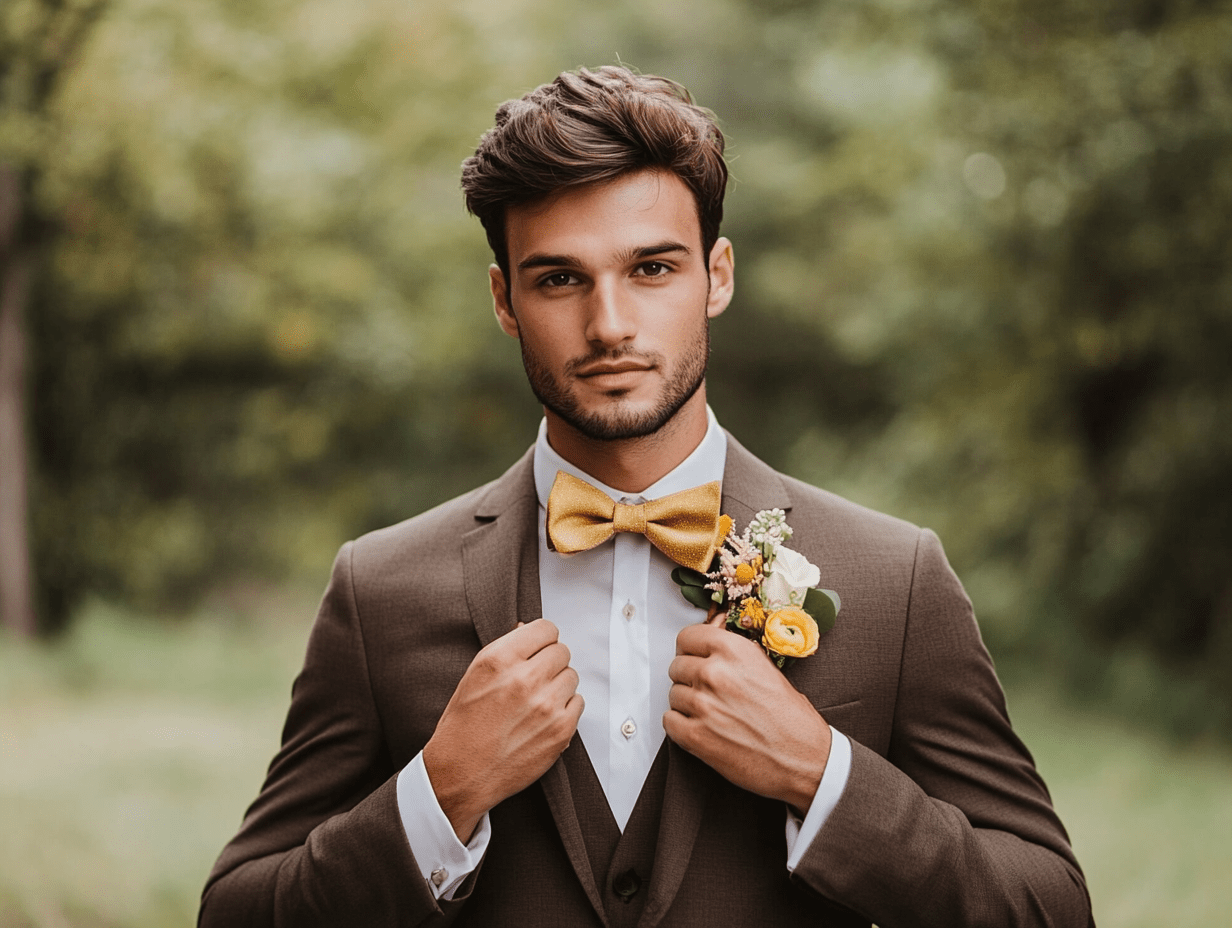
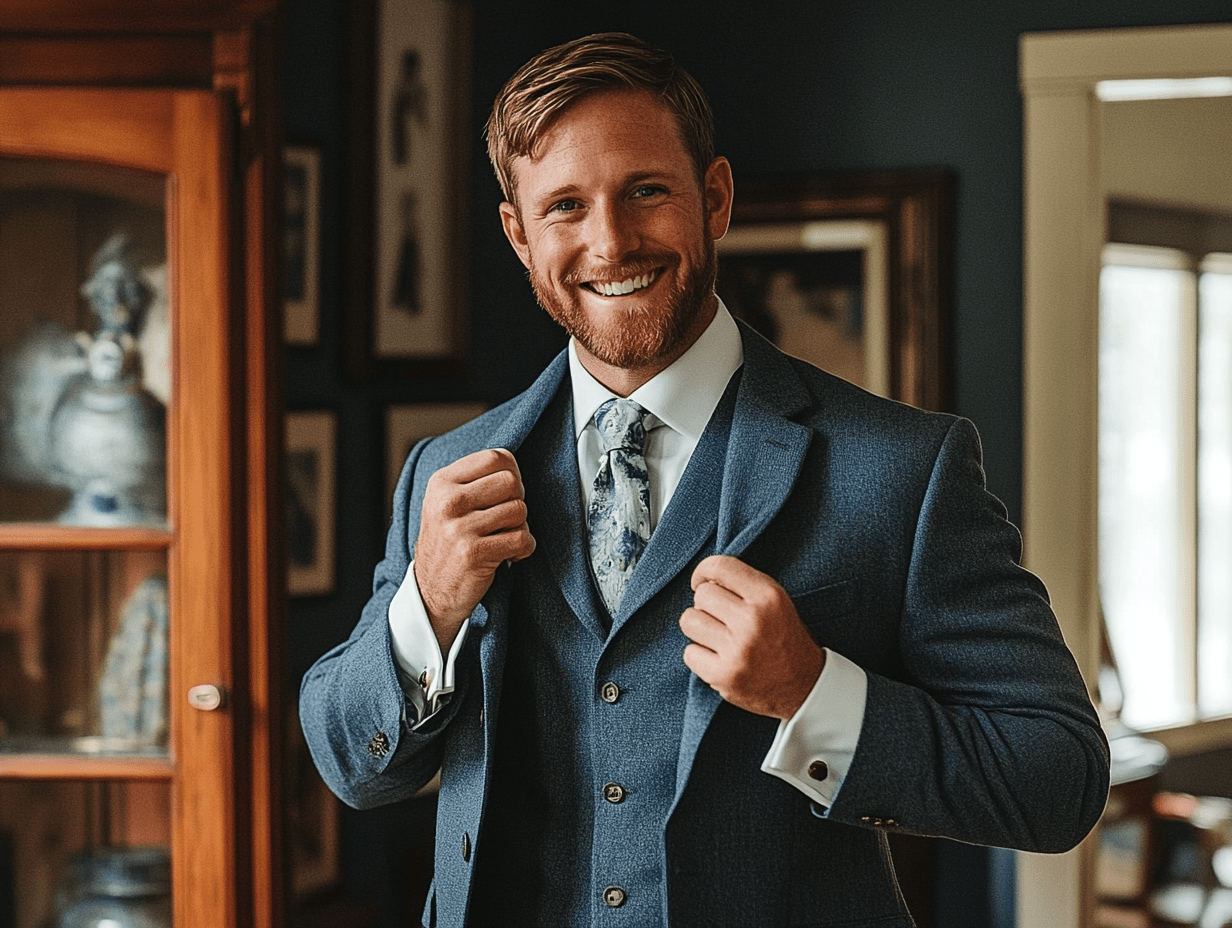
Wedding suit fashion is constantly evolving, and there are numerous styles to choose from: from classic to modern, from understated to extravagant. Current trends show a tendency toward slim silhouettes, bold colors and unusual patterns that emphasize the groom's personal style. Whether you opt for a traditional black suit or a trendy blue tuxedo, make sure the style suits the theme and location of the wedding.
Fit and Tailoring: The importance of a good fit and options for made-to-measure suits
A perfect fit is essential so that you feel comfortable and confident on the big day. Made-to-measure suits are an excellent option to ensure that the suit fits like a glove. Many tailors offer individual adjustments that take into account not only the size but also specific wishes regarding fabric and details. It is worth making an appointment early to allow enough time for alterations.
Accessories for the Groom: A selection of shoes, watches, cufflinks and other accessories
The right accessories complete your look. Shoes should be stylish but comfortable, as you will be on your feet all day. Watches and cufflinks offer the opportunity to make a personal statement and are also a popular keepsake. Other accessories, such as pocket squares or ties, should be color-coordinated with the suit and enhance the overall impression.
Checklist for Choosing the Perfect Suit
Style of the suit
Choose a style that suits the theme of the wedding (formal, semi-formal, casual).
Consider the season and the location of the wedding (lighter fabrics for summer weddings, warmer ones for winter).
Color and material
Choose a color that suits your skin tone and the wedding color palette.
Opt for materials that suit the weather and your comfort (wool, cotton, linen, silk).
Fit of the suit
Make sure the suit fits well - neither too tight nor too loose.
Check the fit at the shoulders, chest and waist, as well as the length of the sleeves and trouser legs.
If necessary, plan for a made-to-measure suit to guarantee a perfect fit.
Shirts and ties
Choose a shirt that goes well with the suit and is comfortable to wear.
Decide whether you prefer a tie, a bow tie or no collar at all, based on the style of the wedding.
Shoes and socks
Choose shoes that match the suit in style and are comfortable (brogues, Oxfords, loafers).
Make sure the color of the shoes matches the belt.
Choose socks that either offer a subtle contrast or are in a neutral color.
Accessories
Decide on cufflinks, a watch and perhaps a pocket square to round off the look.
Consider whether you would like to wear additional accessories such as a waistcoat or a belt.
Fittings and alterations
Pickup and final check
Pick up the suit a few days before the wedding to allow time for last-minute changes.
Check all the details once more, such as buttons, seams and the cleaning of the suit.
By following these tips, you ensure that your wedding suit is not only fashionable but also a perfect fit for you and your big day.
3. Traditions and Customs for the Groom
When planning a wedding, the traditions and customs that concern the groom are an exciting field that is often rich in history and meaning. These traditions vary greatly from culture to culture and offer a wonderful opportunity to honor your own heritage and that of the bride.
Cultural Differences: A description of various traditions and customs worldwide that concern the groom
Around the world there are numerous customs that concern the groom at the wedding. In many cultures the groom plays a central role in rituals and ceremonies. For example:
In India, the groom takes part in the 'Vara Yatra' ceremony, a festive procession before he meets the bride.
In Sweden, it is traditional for the groom to stand with two best men at his side rather than just one.
In Japan, there is the ritual exchange of sake between the families of the bride and the groom, symbolizing their union.
These customs are deeply rooted in the cultural origins of the respective countries and offer insight into the values and history of the communities.
Modern Interpretations: How traditional elements can be interpreted in a modern way and integrated into the wedding
Many couples today want a wedding that combines both traditional and modern elements. Here are some ideas for how traditional customs for the groom can be interpreted in a contemporary way:
Traditional clothing can be combined with modern elements, such as a classic suit with traditional accessories from the respective culture.
Old rituals can be adapted to emphasize equality between the groom and the bride, so that both appear as equally strong partners in the ceremony.
Instead of traditional gifts, symbolic gifts could be exchanged that have a personal meaning for the couple and symbolize their shared future.
By incorporating these traditions and giving them a modern interpretation, you create a wedding that is not only personal and unique, but also honors both family backgrounds. This way, the day becomes not only a celebration of your love, but also a celebration of your roots and your shared future.
4. The Groom's Preparation for the Wedding
Preparing for the big day is not only a question of planning and organization, but also of personal preparation. As the groom, it is important for you to be well prepared both outwardly and inwardly so that you can fully enjoy the day.
Grooming and Styling: Tips for skincare, hairstyle and overall styling for the wedding day
Taking care of your appearance begins long before the wedding day. Here are a few tips for making sure you look your best on the day of the wedding:
Skincare: Start a skincare routine early if you do not already have one. Well-hydrated and well-cared-for skin is the best foundation for any wedding suit.
Hairstyle: Choose a hairdresser you trust and discuss your look a few weeks in advance. A trial styling certainly does not hurt, so that everything is perfect on the wedding day.
Overall styling: Think about the small details such as well-groomed nails and a carefully chosen fragrance, which can make all the difference.
Beard Styles and the Barber
A visit to the barber can be a relaxing ritual that not only helps you look your best, but also helps you unwind. Whether you have a full beard, prefer a few days' stubble or shave completely:
Mental Preparation: The importance of mental preparation for the big day, including stress management and expectations
Mental preparation is just as important as your outward appearance. Here are a few strategies:
Stress management: Deliberately schedule breaks into your wedding day so that you have moments to catch your breath. Techniques such as meditation or light breathing exercises can help calm your nerves.
Expectations: Talk openly with your bride about your feelings and expectations. It is important that you are both on the same page and can enjoy the day together.
Checklist for the Groom's Personal Preparation
Skincare
Hair and beard care
Manicure
Teeth cleaning
Outfit and accessories
Rest
Mental preparation
Emergency kit
This compact checklist should help you to be prepared for the wedding day efficiently and with full focus.
5. The Groom and the Wedding Guests
As the groom, you play a central role not only in relation to your bride and the ceremony, but also in dealing with the guests. Your task is to make sure that everyone feels welcome and valued, while at the same time keeping an overview.
Interacting with the Guests: The groom's role in dealing with the wedding guests
Your interaction with the guests often begins before the wedding and continues on the day itself. Here are a few points you should keep in mind:
Welcome: Try to personally greet as many guests as possible upon their arrival.
Attentiveness: Show interest and gratitude for their presence by taking time for short conversations.
Helpfulness: Be available for any questions or needs that might arise during the celebrations.
Thank-You Speeches and Toasts: Guidance for thank-you speeches or toasts given by the groom
An important moment for every groom is the thank-you speech or the toast. Here are a few tips for how you can master this successfully:
Preparation: Write down your thoughts in advance and practice your toast to gain confidence.
Personality: Include personal anecdotes or words of thanks to your bride, family and friends.
Brevity: Keep your toast concise and entertaining to hold the guests' attention.
By following these tips, you ensure that, as the groom, you play a positive and memorable role both in your interactions with your guests and in your speeches. Your wedding will be an unforgettable event not only for you and your bride, but also for everyone present.
6. Legal and Organizational Aspects
The wedding is not only a day of love and joy, it also entails important legal and financial obligations. As the groom, it is crucial to be aware of these aspects and to prepare accordingly to ensure that everything runs smoothly.
Marriage Certificate and Legal Documents: What does the groom need to keep in mind before and after the wedding when it comes to documents?
The legal preparation for your wedding involves several important steps:
Registering the marriage: Find out from your registry office about the necessary documents and deadlines.
Marriage certificate: Make sure that all documents required to issue the marriage certificate are correct and complete.
Name change: If you or your bride want to change your surname after the wedding, clarify the necessary steps and documents.
Financial Aspects of Wedding Planning: Budget planning and the financial responsibilities of the groom
Careful budget planning is the key to avoiding financial surprises:
Set a budget: Discuss the overall budget with your bride and how it should be divided up.
Cost control: Keep an eye on the expenses for the various wedding items and make sure you regularly review the status of the budget.
Emergency fund: Set aside a small emergency fund for unforeseen expenses.
By addressing these important legal and financial aspects early on, you can ensure as the groom that your wedding is a complete success not only emotionally, but also organizationally.
7. Tips for the Wedding Day
The wedding day is a moment full of joy, but it can also bring stress if you are not well prepared. As the groom, you can help make the day run as smoothly as possible through good planning and preparation.
Time Management on the Wedding Day: Scheduling the day to avoid stress and let everything run smoothly
A well-thought-out schedule is crucial for enjoying the wedding day stress-free:
Detailed schedule: Create a schedule in advance that includes all the important events and times, from the arrival of the guests to the end of the celebration.
Build in buffer times: Allow extra time slots for unexpected delays. This can help minimize stress when things do not go entirely according to plan.
Delegate responsibilities: Make sure that not everything rests on your shoulders. Delegate tasks such as time management to a best man or a wedding planner.
Dealing with Unforeseen Events: Tips on how to react to unexpected problems on the wedding day
Even with the best planning, unexpected events can occur. Here are a few tips for how you can stay calm:
Have an emergency kit ready: Make sure that you or your best man have an emergency kit on hand that contains little lifesavers, such as a sewing kit, stain remover and headache tablets.
Keep a flexible attitude: Stay flexible and open to changes of plan. A cool head helps you find solutions more quickly.
Maintain communication: Keep communication with your bride, the service providers and the guests clear and open, to make sure everyone is informed and can respond smoothly.
By following these tips, you can ensure as the groom that your wedding day runs as smoothly and joyfully as possible.
8. After the Wedding: The Groom's Role in Married Life
After the wedding, a new chapter begins in every groom's life. This transition from the wedding celebration to everyday married life brings with it many changes and new responsibilities to master.
""A successful marriage requires falling in love many times, always with the same person.""
Transition from the Wedding to Everyday Married Life: Adjustments and changes that take place in the life of the groom and the bride after the wedding
The first months after the wedding are often a time of adjustment, in which you grow together as a couple and develop shared routines:
Organizing daily life: From financial planning to running the household, organizing your shared everyday life is now a team project.
Communication: Open and honest communication is the key to making sure that both partners are content and that their needs are met.
Shared goals: Set shared goals for the future, whether professional, family-related or personal, and work toward them together.
Nurturing the Partnership in the Long Term: How the groom can continue to nurture and strengthen the relationship after the wedding
A happy and fulfilling marriage requires ongoing effort and commitment from both partners:
Quality time: Regularly plan time just for the two of you to keep the connection strong.
Show appreciation: Small gestures of love and appreciation can make a big difference in everyday life.
Conflict management: Learn how to argue constructively without hurting one another, and find solutions that are acceptable to both of you.
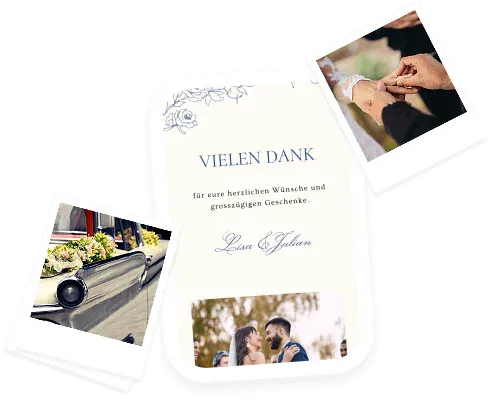
Start your married life with a personalized thank-you card - create it here now!
Through these measures, the groom can actively help the marriage grow and thrive beyond the honeymoon, thus creating a solid foundation for a long and happy life together.
Sources:
https://hochzeitshaus-boos.de/ueber-uns/blog/braeutigam/
https://www.hochzeitsrausch.com/braeutigam-anzug-und-accessoires/