Your bridal bouquet is more than just a flower arrangement - it is a personal statement and a central part of your wedding. In our comprehensive guide, you'll discover everything you need to know to choose, design, and preserve the perfect bouquet.
Key Takeaways
Variety of styles: Discover different bridal bouquet styles from classic to modern, including cascade, Biedermeier, and posy, that suit your wedding theme.
DIY guides: Learn how to create your own bridal bouquet with step-by-step instructions, including the materials and tools you'll need.
Care tips: Get valuable tips on caring for and preserving your bridal bouquet on the wedding day to keep it fresh and beautiful.
Traditions and customs: Learn more about the cultural and historical meanings of the bridal bouquet and modern alternatives to the traditional bouquet toss.
Sustainability: Discover ways to preserve or repurpose your bridal bouquet after the wedding to create a lasting memory.
🎧 Prefer listening over reading?
Already got enough wedding to-dos on your mind? Then lean back for a moment and listen to this guide, as if it were a chat with your wedding planner. The summary was created by a smart digital wedding helper – so yes, by an AI, but a really lovely one 😉
1. Introduction to the Bridal Bouquet
The bridal bouquet is more than just a beautiful arrangement of flowers; it is a deeply rooted symbol within wedding tradition. In this first section, we explore the historical significance and evolution of the bridal bouquet, as well as current trends and styles that inspire modern brides.
The Meaning of the Bridal Bouquet in Wedding Tradition
The bridal bouquet plays a central role in the symbolism and rituals of a wedding. Originally, it was meant to ward off evil spirits and to symbolize luck and fertility for the bride and groom. Over time, its meaning has changed, and today the bridal bouquet often represents the personal aesthetic and sense of style of the bride. It is an expression of her individuality and of the overarching wedding theme.
An Overview of Different Styles and Trends
From classic to modern, the style of the bridal bouquet can vary widely and is often influenced by the latest trends in the wedding industry. Popular styles include:
Classic: A round bouquet of roses that reflects elegance and tradition.
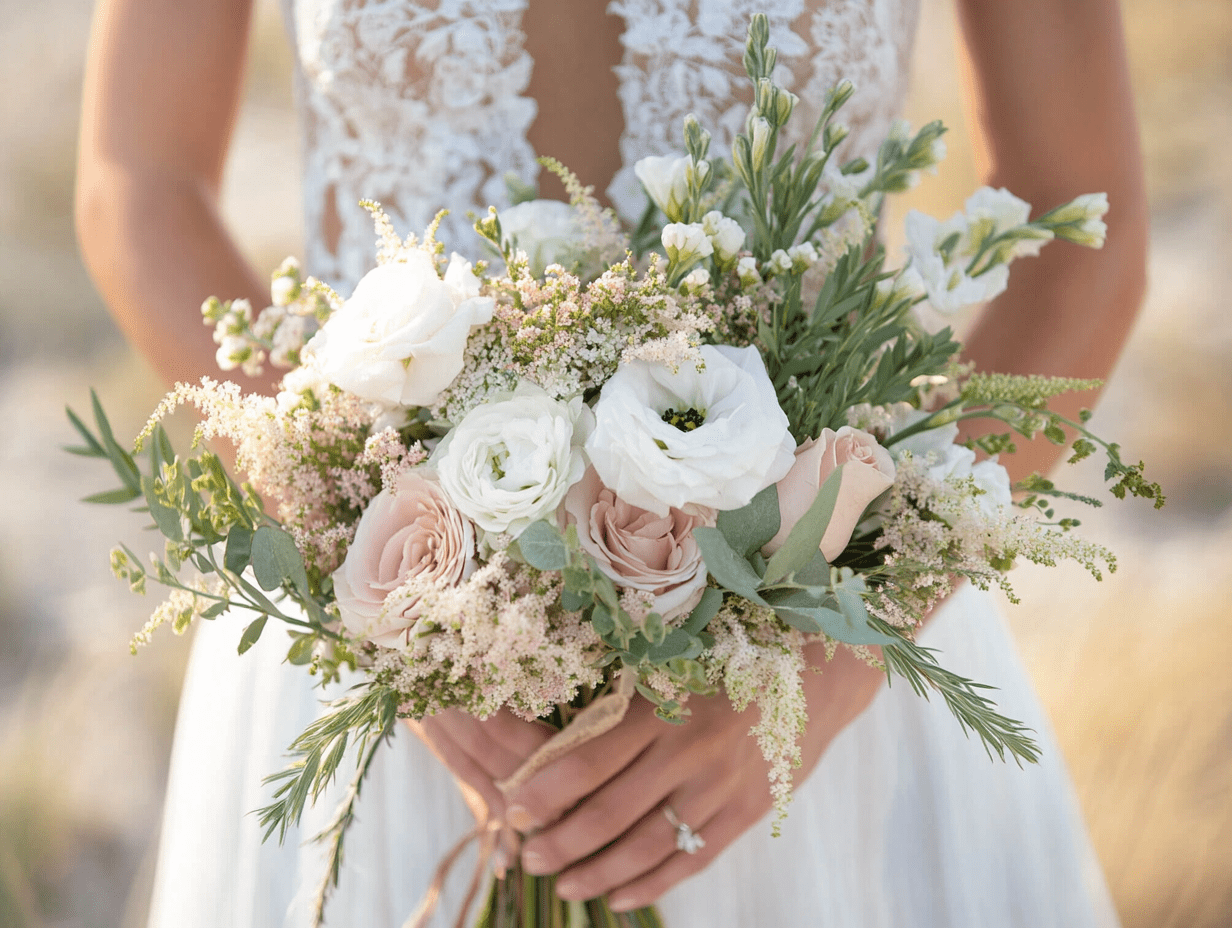
Boho: Free-form arrangements with wildflowers and unconventional elements, ideal for rustic or free-spirited weddings.
Glamorous: Opulent bouquets with a mix of exotic flowers and shimmering accessories.
Minimalist: Simple yet stylish arrangements, often made up of just one or two types of flowers.
Every year, floristry trends bring new ideas and concepts for bridal bouquets that can be tailored to the bride's personal taste and the details of the wedding day.
2. Choosing the Flowers for the Bridal Bouquet
Choosing the right flowers for a bridal bouquet is an art in itself. In this section, we'll look at the various criteria to consider when selecting flowers, as well as some of the most popular flowers used in bridal bouquets.
Criteria for Choosing Flower Types
Season: The availability of flowers varies by season, which can affect both cost and freshness. For example, peonies are mainly available in late spring, while roses are available year-round.
Meaning of the flowers: Many couples choose flowers based on their symbolic meaning. For example, roses represent love and passion, while calla lilies symbolize purity and beauty.
Color themes: The colors of the flowers should be integrated harmoniously into the wedding's overall color scheme. Hydrangeas offer a wide range of shades that can easily be adapted to any theme.
Popular Flowers for Bridal Bouquets
Roses: A classic among wedding flowers, known for their beauty and profound symbolic meaning.
Hydrangeas: Popular for their lush, full blooms that add volume and depth of color to any bouquet.
Calla lilies: Elegant flowers with a strong visual impact, ideal for modern bridal bouquets.
Baby's breath: Often used as a filler between larger blooms, adding texture and delicacy.
These flowers are just a few examples of the many options available for creating a bridal bouquet that is not only visually stunning but also carries personal meaning.
3. Colors and Their Meanings
Choosing the right colors for your bridal bouquet is crucial, as they influence not only the aesthetic but also the emotional impact of your wedding. In this section, we explain the meaning of different colors in bridal bouquets and give you tips on how to choose the perfect colors that match both your wedding theme and your wedding dress.
""Flowers are the love thoughts of nature.""
The Meaning of Different Colors in Bridal Bouquets
Colors carry profound symbolic meanings based on cultural, historical, and personal beliefs. Here is a color chart that shows you which emotions or meanings different colors represent:
Color | Meaning |
|---|
Red | Love and passion |
White | Purity and innocence |
Blue | Calm and trust |
Yellow | Optimism and joy |
Green | Growth and harmony |
Purple | Royalty and mystery |
How to Choose Colors That Complement the Wedding Theme and the Dress
When matching the colors of your bridal bouquet to your wedding theme and your wedding dress, you should keep the following points in mind:
Wedding theme: Choose colors that complement the overall color theme of your wedding. If your wedding has a rustic style, for example, earthy tones like green and brown can be a beautiful addition.
Wedding dress: Consider the color of your wedding dress. A white dress provides a neutral canvas that lets you play with a wide range of colors, while a colored dress calls for carefully coordinated accents.
Personal preferences: Ultimately, the colors of your bridal bouquet should also reflect your personal taste. Choose colors that you personally love and want around you on your big day.
With these tips, you're sure to find the perfect colors for your bridal bouquet - colors that not only look beautiful but also bring deeper meaning and harmony to your wedding.
4. Shapes and Styles of Bridal Bouquets
When planning your wedding, choosing the bridal bouquet is one of the most personal decisions you'll make. The shape and style of your bouquet can say a lot about your personal taste and are crucial to the overall look of your big day. In this section, you'll learn more about the different shapes of bridal bouquets and the occasions each is best suited for.
Different Shapes of Bridal Bouquets
Bridal bouquets come in a wide variety of shapes and styles, each with its own aesthetic and symbolism. Here are some of the most popular shapes:
Cascade: This bouquet flows downward in a draped shape and is ideal for formal, traditional weddings. It is magnificent and makes a dramatic statement.
Biedermeier: This shape is round and structured, often with concentric circles of blooms. The Biedermeier bouquet is elegant and works well for both classic and modern weddings.
Posy: Small and usually round, this type of bouquet is often chosen by brides who prefer a simple and understated option. It is perfect for intimate, casual occasions.
Benefits and Occasions for Different Bouquet Shapes
Each bouquet shape has its own advantages and suits different wedding styles and settings:
Cascade: Perfect for a large, opulent wedding. This bouquet adds a layer of formality and sophistication.
Biedermeier: Ideal if you want to accentuate your outfit with an elaborate yet orderly accessory.
Posy: Great for brides looking for something compact and charming, especially popular at outdoor or summer weddings.
5. Matching the Bridal Bouquet to the Wedding Dress
Choosing a bridal bouquet that perfectly matches the wedding dress is an essential part of wedding planning. This section covers how the shape and style of the dress can influence your choice of bridal bouquet, and gives examples of harmonious combinations that create a stunning visual unity.
Considering the Style and Shape of the Dress When Choosing the Bouquet
Matching the bridal bouquet to the wedding dress begins with considering the style and silhouette of the dress. Here are a few tips on how to choose the perfect bouquet:
A-line or princess dress: These classic wedding dresses pair best with a traditional round bouquet or a light cascade bouquet that complements the shape of the dress without overwhelming it.
Mermaid or trumpet dress: These figure-hugging dresses benefit from slimmer bouquet shapes, such as a long-stemmed bouquet or a minimalist posy that emphasizes the elegant lines.
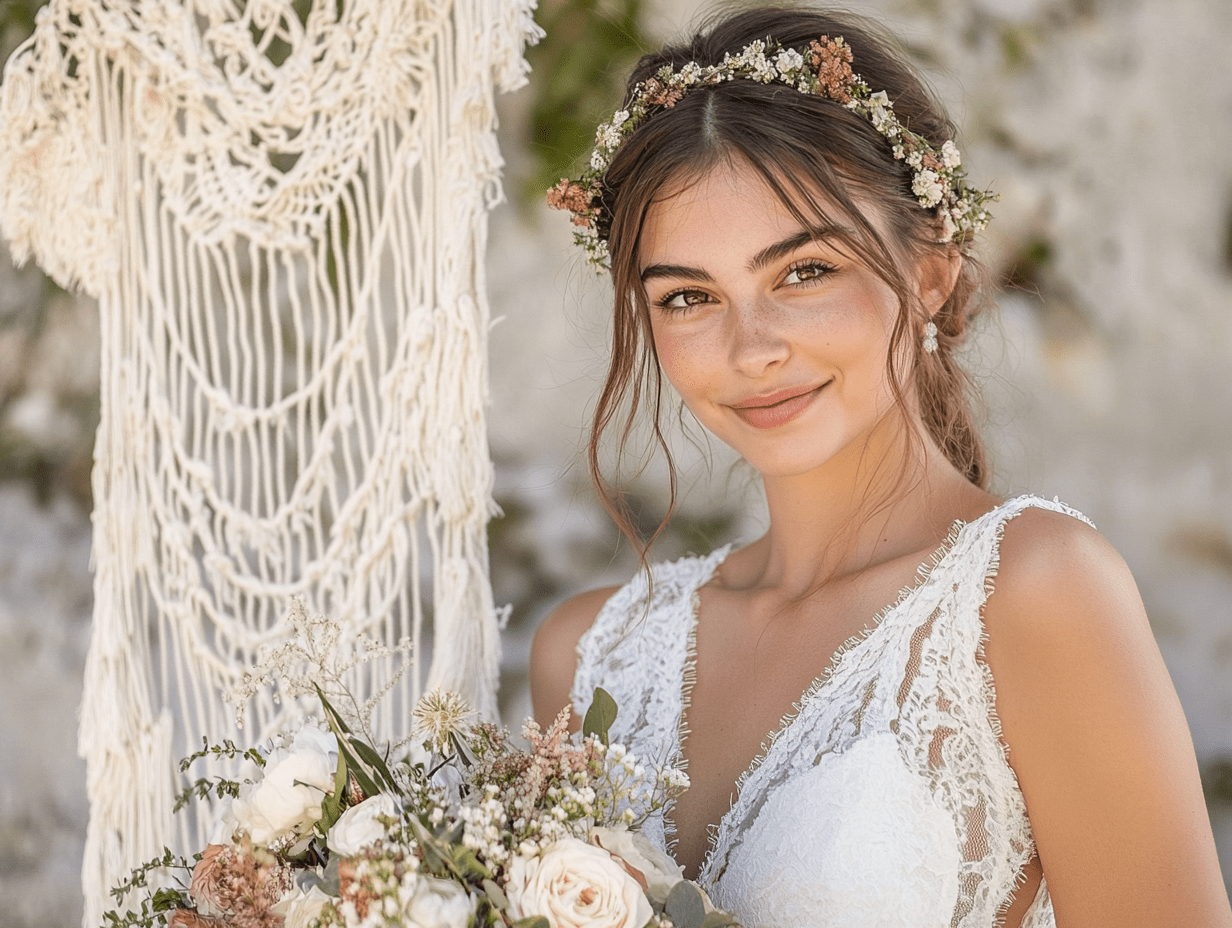
Boho or loose-fitting dresses: Free-form or wildflower bouquets are the ideal complement to the relaxed style of these dresses.
Examples of Successful Dress and Bouquet Combinations
Classic wedding dress and round rose bouquet: A timeless combination that radiates elegance and sophistication.
Modern dress and geometric bouquet: Perfect for the modern bride who prefers a clean, trendy aesthetic.
Vintage dress and Biedermeier bouquet: A charming choice that highlights the historical character of the dress.
These examples are meant to inspire you and show how the right pairing of wedding dress and bridal bouquet creates a harmonious overall look.
6. DIY Bridal Bouquet: Step-by-Step Guide
Making your own bridal bouquet can be a wonderful way to add a personal touch to your wedding. Here is a detailed guide that shows you how to create your own bridal bouquet. We'll also cover the materials and tools you'll need.
To create your own bridal bouquet, you'll need a few basic materials and tools. Here is a list of what you should gather:
Materials: Fresh flowers of your choice, greenery for filler, floral wire, and floral tape.
Tools: A sharp pair of garden shears, wire cutters, and possibly a knife.
Prepare these tools and materials in advance so that you have everything within reach when assembling the bouquet.
Detailed Instructions for Making a Bridal Bouquet
Now that you have everything ready, follow this step-by-step guide to create your bridal bouquet.
Preparing the flowers: Cut the stems at an angle and remove any excess leaves that would sit below the waterline in the bouquet.
Arranging the base: Start with the larger flowers and arrange them in your hand into a beautiful base structure.
Adding filler: Incorporate greenery and smaller flowers to fill gaps and give the bouquet volume.
Binding the bouquet: Use the floral wire to secure the bouquet in place before wrapping it with the floral tape.
Finishing touch: Check the bouquet from all sides and adjust it until it is perfect. Finally, trim the stems to the desired length and cover the end with a ribbon.
Drying: If you want to keep your bouquet after the wedding, hang it upside down in a dry, dark room to dry it gently.
The Perfect Cards for Your Wedding
Whether classic, modern, or completely individual - at Mi Boda you'll find digital wedding invitations that perfectly match your style.
7. The Role of the Florist in Designing the Bridal Bouquet
A talented florist can turn the dream of your perfect bridal bouquet into reality. In this section, we'll show you how to choose the right florist and work with them successfully to design a bouquet that perfectly suits your big day.
How to Choose the Right Florist
Choosing the right florist is crucial to ensuring that your bridal bouquet turns out as perfect as possible. Here is a checklist to help you make your choice:
Experience and specialization: Look for a florist who has experience with wedding bouquets and whose style you like.
Portfolio and references: Look at the florist's previous work and ask for feedback from past clients. Tip: check whether the florist has a Google Business listing.
Communication skills: Your florist should be open to your ideas and able to communicate their own suggestions clearly.
Price and availability: Make sure the florist fits within your budget and is available for your wedding date.
Tips for Working With a Florist to Design the Ideal Bridal Bouquet
Once you've found the right florist, it's important to work with them effectively to ensure that your bridal bouquet turns out exactly as you imagine. Here are a few tips:
Share your vision: Bring along pictures of bridal bouquets you like and explain exactly what you love about them.
Be open to suggestions: A good florist can help you refine your ideas and make sure they are practical to realize.
Discuss the budget clearly: Communicate clearly from the start how much you can spend, so the florist can make suggestions within your range.
Schedule follow-up meetings: Review progress regularly and make sure all details are settled before the wedding.
8. Caring for the Bridal Bouquet Before and On the Wedding Day
Caring for your bridal bouquet is essential to ensure it stays fresh and beautiful throughout the day. Here you'll find useful tips on preserving freshness and on the proper handling and storage of your bouquet, so that it can be kept as a beautiful memory of your special day.
Tips for Keeping the Bouquet Fresh and Beautiful
To keep your bridal bouquet fresh, please follow these guidelines:
Water: Make sure the flowers always have enough water, especially when they go for longer periods without a water supply, such as during the ceremony.
Cooling: Whenever possible, keep the bouquet in a cool room or a refrigerator to keep the flowers fresh.
Cutting: Cut the stems at an angle before placing them in water to maximize water absorption.
Handling and Storing the Bouquet
Proper handling and storage of your bridal bouquet before and during the wedding are essential to preserving its beauty:
Transport: Use a special flower vase for transport to make sure the bouquet is secure and has enough water.
Handling: Handle the bouquet carefully. Avoid crushing the flowers or touching the blooms and leaves unnecessarily.
Storage before the ceremony: Keep the bouquet in a cool, shaded place to protect it from wilting.
These practical care tips will help you keep your bridal bouquet in optimal condition throughout the day, so it stays radiant and fresh in your photos and in your memories.
9. Traditions and Customs Surrounding the Bridal Bouquet
The bridal bouquet is not only a beautiful accessory but is also deeply rooted in tradition and custom. In this section, we explore the historical and cultural meanings of the bridal bouquet, as well as the bouquet toss and modern alternatives to this age-old custom.
Historical and Cultural Meanings of the Bridal Bouquet
The bridal bouquet has a long history that is deeply rooted in tradition. Originally, it served to ward off evil spirits and to symbolize luck and fertility for the bride and groom. Over the centuries, the meanings and uses of the bridal bouquet have evolved:
Protection: In many cultures, certain flowers were chosen for their supposed protective properties.
Symbolism: Each flower in the bouquet often has its own meaning, such as love, luck, or loyalty.
The Bouquet Toss: Meaning and Modern Alternatives
The bouquet toss is a tradition in which the bride throws her bouquet over her shoulder, and the unmarried woman who catches it is said to be the next one to marry. However, this tradition is not popular everywhere, and some couples look for alternative ways to include the bridal bouquet in their celebration:
Personal handover: Instead of throwing the bouquet, some brides choose to give it to a special person, often their mother or a close friend.
Ceremonial circles: Some brides form a circle with their closest friends and family members and hand over the bouquet along with personal wishes.
Preservation: Instead of throwing the bouquet, some choose to preserve it and keep it as a keepsake.
10. After the Wedding: What to Do With the Bridal Bouquet?
The bridal bouquet is a beautiful symbol of your wedding that can retain a special meaning even after the big day. Here you'll learn how to preserve your bridal bouquet to keep it as a memory, and you'll get creative ideas for repurposing the bouquet.
Preservation Techniques for the Bridal Bouquet as a Keepsake
There are various methods for preserving your bridal bouquet and keeping it as a memory of your special day. Here are some popular techniques:
Drying: Hang your bouquet upside down in a dry, dark room. After a few weeks, the flowers are fully dried and can be displayed in a frame or a display case.
Embedding in resin: This method allows you to preserve individual flowers or even the entire bouquet in a clear block of resin, which can serve as a decorative element in your home.
Pressing: Choose individual blooms from the bouquet and place them between the pages of a heavy book to press them. The pressed flowers can later be used for crafting picture frames or bookmarks.
Ideas for Repurposing the Bouquet After the Wedding
After you've preserved your bridal bouquet, there are many creative ways to repurpose it:
Jewelry: Have the dried or pressed flowers incorporated into jewelry such as pendants or bracelets.
Decoration: Use the dried bouquet or individual flowers as decoration in your home, for example in a beautiful glass vessel or as a wall wreath.
Gifts: Create small keepsakes with the flowers from the bouquet that you can use as gifts for family and friends, especially for those who attended your wedding.
Sources:
https://deavita.com/dekoration/hochzeit/brautstrauss-herbst-ideen-blumen-herbstliche-hochzeit-deko-894876.html
https://www.dein-brautstrauss.de/brautstrauss-auswahl/